
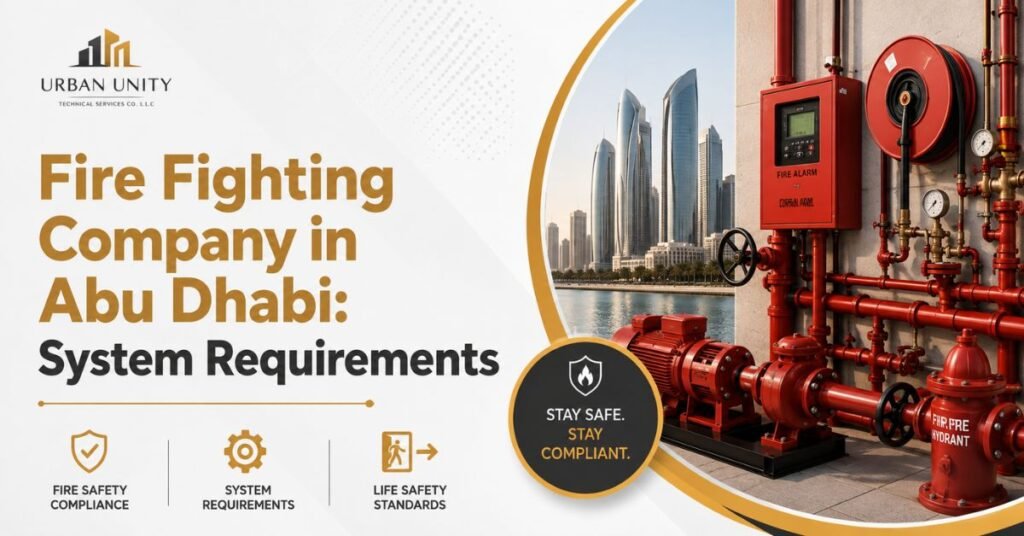
Fire safety is a critical requirement for every commercial, residential, industrial, and hospitality property in Abu Dhabi. Installing the correct fire alarm and fire fighting systems helps protect occupants, reduce property damage, support regulatory compliance, and prevent delays during inspections or business licensing procedures. For this reason, choosing an experienced fire fighting company in Abu Dhabi is an important step when planning a new construction project, interior fit-out, renovation, or system upgrade.
These requirements apply to offices, restaurants, cafés, warehouses, retail shops, clinics, hotels, residential buildings, factories, and other facilities that must meet local fire and life-safety standards.
In this post, we will provide a clear rundown of Fire Fighting Company in Abu Dhabi: System Requirements, including why compliant fire protection is important, the main systems your property may require, how installation and approval normally work, and eight practical recommendations for property owners, consultants, contractors, and business operators planning a fire fighting system installation in Abu Dhabi.
How to Install a Fire Fighting System in Abu Dhabi
Installing a fire fighting system is not simply a matter of purchasing extinguishers, sprinklers or fire alarms. The system must be designed for the property’s use, installed by qualified professionals, tested correctly and approved by the relevant authorities. Abu Dhabi Civil Defence reviews engineering and technical plans for new facilities and conducts inspections to verify compliance with preventive safety requirements.
Step 1: Assess the Property and Its Fire Risks
Begin with a detailed site assessment conducted by a qualified fire fighting company in Abu Dhabi. The contractor should review:
- The property type and total area
- Number of floors and occupants
- Building layout and evacuation routes
- Nature of the business activities
- Combustible or hazardous materials stored onsite
- Existing fire alarm and fire fighting equipment
- Kitchen, electrical, mechanical and storage areas
- Water supply and available space for pumps or tanks
The requirements for an office, restaurant, warehouse, clinic or industrial facility will not necessarily be the same. The assessment helps determine the correct system for the building rather than installing generic equipment that may fail to meet its actual risks.
Step 2: Determine the Required Fire Protection Systems
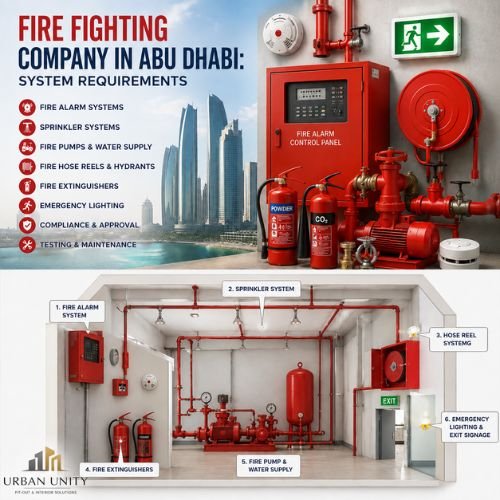
Based on the assessment, the consultant or contractor identifies the systems required for the premises. Depending on the building’s size, use, height and risk classification, these may include:
- Fire alarm control panels
- Smoke and heat detectors
- Manual call points
- Alarm sounders and visual indicators
- Portable fire extinguishers
- Automatic sprinkler systems
- Fire hose reels
- Wet or dry risers
- Fire hydrants
- Fire pumps and water tanks
- Emergency and exit lighting
- Kitchen fire-suppression systems
- Smoke-control or extraction systems
- Fire-rated doors and fire-stopping systems
Not every property requires every system. The final selection must follow the approved design and the applicable UAE Fire and Life Safety Code requirements.
Step 3: Prepare the Fire Alarm and Fire Fighting Drawings
The next step is to prepare detailed engineering drawings and technical calculations. These typically show:
- Detector and alarm-device locations
- Fire-extinguisher types and positions
- Sprinkler layouts and coverage
- Pipe sizes and routing
- Hose-reel and hydrant locations
- Fire-pump and water-tank details
- Emergency-light and exit-sign locations
- Control-panel connections
- System zones and interfaces
- Equipment schedules and technical specifications
The drawings should coordinate with the architectural, electrical, mechanical and HVAC plans. Poor coordination can cause clashes with ceilings, lighting, ductwork, partitions and other building services.
Step 4: Submit the Design for Approval
The drawings and supporting documents must be submitted through the applicable approval process before installation begins where approval is required. Abu Dhabi Civil Defence provides engineering drawing examples and requires fire fighting installations and locations to conform to the UAE Fire and Life Safety Code, subject to any Abu Dhabi-specific requirements.
The submission may include:
- Architectural drawings
- Fire alarm drawings
- Fire fighting drawings
- Hydraulic calculations
- Equipment data sheets
- Material certificates
- Project and property information
- Contractor or consultant details
- Existing approval documents for renovation projects
Any comments issued during the review must be corrected and resubmitted. Starting installation before receiving the necessary approval can result in rework, project delays and additional costs.
Step 5: Select Approved and Compliant Equipment
After the design is approved, the contractor should procure equipment that matches the approved specifications. Products must be suitable for their intended application and comply with applicable standards and authority requirements.
Equipment should not be substituted without confirming that the alternative product is accepted and technically compatible. Important items to verify include:
- Product certifications
- Model numbers
- Fire-resistance ratings
- Pressure and flow ratings
- Panel and detector compatibility
- Manufacturer warranties
- Availability of replacement parts
- Compliance documentation
Using unapproved or incompatible products can lead to system faults, failed testing or rejection during inspection.
Step 6: Install the System According to the Approved Drawings
Qualified technicians can then begin the installation. The work must follow the approved drawings, manufacturer instructions and applicable safety requirements.
Installation activities may include:
- Installing fire alarm cables, conduits and containment
- Mounting detectors, manual call points, sounders and panels
- Installing fire fighting pipes and supports
- Connecting sprinklers, valves, hose reels and hydrants
- Installing fire pumps, controllers and water tanks
- Positioning and labelling portable extinguishers
- Installing emergency lights and exit signs
- Sealing service penetrations with suitable fire-stopping systems
- Connecting the fire systems with elevators, HVAC units, access controls or other required interfaces
The site team should compare the completed work with the approved drawings throughout the installation. Any necessary change should be documented and approved before it is permanently implemented.
Step 7: Test and Commission Every Component
Once installation is complete, the contractor must test the system thoroughly. Testing should confirm that every component operates correctly and that the systems work together during an emergency.
Testing may include:
- Activating every smoke and heat detector
- Testing manual call points
- Confirming audible and visual alarm coverage
- Checking fire alarm zones and device addresses
- Testing fire-pump automatic and manual operation
- Measuring water pressure and flow
- Conducting sprinkler and pipework tests
- Testing hose reels and hydrants
- Inspecting extinguishers
- Checking emergency lights and exit signs
- Testing shutdown and interface functions
- Verifying backup power and batteries
Any fault identified during commissioning must be corrected before requesting the final inspection.
Step 8: Prepare the Completion Documents
The contractor should compile a complete handover package after testing. The documents may include:
- Approved drawings
- As-built drawings
- Testing and commissioning reports
- Equipment data sheets
- Product certificates
- Warranty documents
- Operation and maintenance manuals
- Device and equipment schedules
- Completion certificates
- Maintenance contract documentation
As-built drawings are particularly important because they record the system that was actually installed, including any approved changes made during construction.
Step 9: Arrange the Final Inspection
When the system and documents are ready, the required inspection can be arranged. During the inspection, the installed equipment, system operation, documentation and overall compliance may be reviewed.
Common issues that can delay approval include:
- Equipment installed in different locations from the approved drawings
- Inaccessible detectors, valves or extinguishers
- Incorrect device labels
- Alarm or pump faults
- Missing certificates
- Incomplete testing reports
- Blocked exit routes
- Defective emergency lighting
- Unapproved changes to the design
A professional pre-inspection by the contractor can help identify and correct these issues before the official visit.
Step 10: Obtain Compliance Documentation and Begin Maintenance
After the property meets the required preventive safety conditions, the applicable compliance process can be completed. Abu Dhabi Civil Defence provides services for issuing and renewing Certificates of Compliance with Preventive Safety Requirements for establishments classified according to their level of risk.
The responsibility does not end once approval is obtained. The property owner or facility manager should arrange ongoing preventive maintenance for the fire alarm and fire fighting systems.
A maintenance programme should cover:
- Routine system inspections
- Detector and alarm testing
- Fire-pump testing
- Extinguisher servicing
- Sprinkler and valve inspection
- Hose-reel and hydrant checks
- Emergency-light testing
- Battery and backup-power checks
- Fault repairs
- Maintenance reports and records
Working with an experienced fire fighting company in Abu Dhabi from the assessment and design stages through installation, approval and maintenance helps reduce technical errors, failed inspections and unnecessary project delays.
Analyzing a Fire Fighting Company in Abu Dhabi
Choosing the right fire fighting company in Abu Dhabi requires more than comparing prices. Property owners, contractors, consultants and facility managers should evaluate whether the company can design, install, test, document and maintain fire protection systems according to the approved project requirements.
A proper analysis helps reduce the risk of failed inspections, unreliable equipment, incomplete documentation and unexpected repair costs. It also helps businesses distinguish between a qualified fire protection provider and a contractor offering a low price without the necessary technical support.
Check the Company’s Approvals and Qualifications
Start by confirming whether the company is properly licensed and qualified to provide the required fire alarm, fire fighting or maintenance services.
A reliable company should be able to provide relevant licences, certifications and technical documents when requested. It should also understand the approval and inspection procedures that apply to projects in Abu Dhabi.
A warning sign is a contractor that avoids questions about its qualifications or promises approval without reviewing the property, drawings or existing systems.
Review the Services Included
Not every fire protection company offers the same scope of work. Some may provide only installation, while others handle design, authority submissions, testing, commissioning, repairs and annual maintenance contracts.
A strong service provider should clearly explain whether its quotation includes:
- Site inspection and risk assessment
- Fire alarm and fire fighting design
- Drawings and technical calculations
- Equipment supply
- Installation
- Testing and commissioning
- Inspection support
- As-built drawings
- Handover documents
- Warranty and maintenance
A poor quotation may use general descriptions such as “complete fire system” without identifying the equipment, quantities, brands, exclusions or approval responsibilities.
Evaluate the Technical Assessment
A professional contractor should inspect the property before recommending a system or issuing a final quotation. The assessment should consider the building type, floor area, number of occupants, business activity, existing equipment and fire risks.
A good analysis produces a system tailored to the premises. For example, a restaurant may require kitchen fire suppression, while a warehouse may need more extensive sprinkler, hydrant and fire-pump coverage.
Be cautious of a company that recommends the same package for every property without conducting a proper inspection.
Compare Equipment Quality and Compliance
The quotation should identify the proposed equipment, including brands, model numbers, technical specifications and certifications where applicable.
Good results include:
- Equipment matching the approved design
- Compatible panels, detectors and devices
- Clear pressure and flow specifications
- Valid product documentation
- Available warranties and spare parts
- Recognised manufacturers
Bad results include unidentified brands, incompatible components, missing certificates or equipment that cannot be supported after installation.
The lowest-priced equipment may create higher long-term costs if replacement parts are unavailable or the system repeatedly develops faults.
Examine the Installation Method
The quality of installation can affect the system’s performance even when good equipment is used. Review how the company plans to coordinate its work with ceilings, electrical systems, HVAC services, partitions and other building elements.
A qualified company should follow the approved drawings, protect installed equipment, label components correctly and document any necessary design changes.
Poor workmanship may include exposed wiring, unsupported pipes, inaccessible valves, badly positioned detectors, incorrect labels or unapproved changes to the approved layout.
Analyze Testing and Commissioning Procedures
A complete fire protection system must be tested before handover. Ask the contractor which tests will be performed and whether written commissioning reports will be provided.
Proper testing may cover:
- Smoke and heat detectors
- Manual call points
- Sounders and visual alarms
- Fire alarm control panels
- Fire pumps
- Sprinkler pressure and flow
- Hose reels and hydrants
- Emergency and exit lighting
- Backup batteries
- System interfaces
A good company records the test results and corrects faults before arranging an inspection. A bad company may perform only a basic visual check or ask the client to request an inspection before the system is fully ready.
Compare Quotations Carefully
Price is important, but quotations should be compared based on scope rather than the final amount alone.
Check whether each quotation includes the same:
- Equipment quantities
- Equipment brands
- Drawings and submissions
- Installation materials
- Testing and commissioning
- Inspection support
- Documentation
- Warranty
- Maintenance
- Repair exclusions
A lower quotation may exclude authority fees, replacement parts, civil works, access equipment, wiring, pipe modifications or inspection attendance.
The best quotation is usually the one that provides the clearest scope, compliant equipment and dependable after-sales support—not necessarily the lowest initial price.
Review Maintenance and Emergency Support
Fire protection systems require regular inspection and maintenance after installation. Ask whether the company offers an annual maintenance contract and what services are included.
A reliable maintenance provider should offer scheduled visits, testing, fault reporting, repair recommendations and service records. It should also explain its response procedure for urgent faults.
Warning signs include unclear response times, unlimited exclusions, no written reports or an AMC that covers inspections but excludes almost every repair.
Check Previous Project Experience
Review the company’s experience with properties similar to yours. A contractor experienced in villas may not necessarily have the same capabilities required for warehouses, restaurants, hospitals or industrial buildings.
Ask for examples of completed projects, client references or evidence of similar installations. Look for experience with both the property type and the specific systems required.
Relevant experience improves the likelihood that the company understands common design challenges, inspection issues and system coordination requirements.
Good vs. Bad Fire Fighting Company Analysis
A good fire fighting company in Abu Dhabi provides a clear technical assessment, detailed quotation, compliant equipment, qualified installation, complete testing and reliable documentation. It also explains responsibilities, exclusions, warranties and maintenance requirements before work begins.
A poor company relies mainly on a low price, provides limited technical information, uses unclear equipment specifications and cannot explain how the installation will be tested or approved.
By analyzing these factors before appointing a contractor, businesses can make a more informed decision, protect their property and reduce the possibility of approval delays, system failures and unexpected costs.
Installing a compliant fire fighting system in Abu Dhabi requires careful planning, approved designs, suitable equipment, qualified installation, proper testing and ongoing maintenance. The most important takeaway is that fire protection should never be treated as a basic equipment purchase or a last-minute approval requirement. Every system must be selected according to the property type, level of risk and applicable safety requirements.
Working with an experienced fire fighting company in Abu Dhabi can help property owners, business operators, consultants and contractors avoid design mistakes, failed inspections, installation delays and unexpected costs. A dependable company should provide a clear scope of work, compliant equipment, professional installation, commissioning documents and reliable maintenance support after handover.
For more useful guidance, explore our resources about fire alarm installation, fire fighting AMC services, DCD approval, authority approvals and preventive fire system maintenance in the UAE.
Get a Fire Fighting System Consultation
Planning a new fire fighting system, upgrading an existing installation or looking for a reliable annual maintenance contract?
Urban Unity provides fire alarm and fire fighting system installation, testing, maintenance, rectification and authority approval support for commercial, residential and industrial properties across the UAE.
Contact our team today to arrange a site assessment and receive a customized quotation based on your property and fire safety requirements.
Request your free consultation today.