
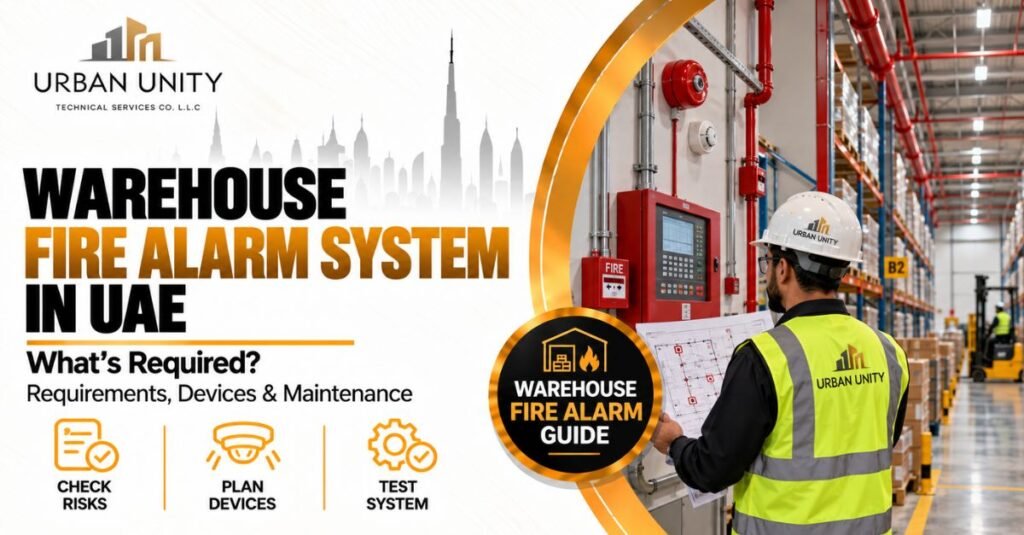
Warehouse Fire Alarm System in UAE: What’s Required?
A warehouse fire alarm system is essential for protecting stored goods, employees, equipment, and daily operations from fire-related risks. Unlike small offices or retail shops, warehouses often have high ceilings, large storage areas, industrial equipment, and different types of combustible materials. These conditions make proper fire detection, alarm installation, and regular maintenance especially important.
For warehouse owners, logistics operators, facility managers, and industrial businesses across the UAE, choosing the right fire alarm system for warehouses is not only about safety. It also affects Civil Defence compliance, inspection readiness, operational continuity, and long-term maintenance costs.
Depending on the warehouse layout and storage conditions, the system may include an addressable fire alarm system, smoke detectors, beam detectors, manual call points, sounders, strobes, and a fire alarm control panel.
In this guide, we’ll explain the warehouse fire alarm requirements in UAE, explore suitable detection systems, discuss installation considerations, and highlight important cost and maintenance factors before choosing a fire alarm contractor.
Table of Contents
ToggleWhat Is a Warehouse Fire Alarm System?
A warehouse fire alarm system is a network of detection and warning devices designed to identify possible fires and alert people inside an industrial storage facility. It typically connects smoke or heat detection devices, manual call points, and audible or visual alarms to a fire alarm control panel, enabling occupants to respond quickly.
Unlike standard commercial spaces, warehouses often have high ceilings, large storage areas, pallet racks, machinery, and different types of stored materials. These conditions can make fire detection more challenging and require a carefully designed warehouse fire detection system.
Depending on the warehouse layout, storage activities, and fire risks, the installation may include:
-
Addressable fire alarm systems to identify the exact device reporting an alarm or fault.
-
Beam smoke detectors for suitable large, high-ceiling spaces.
-
Smoke and heat detectors selected according to environmental conditions and fire risks.
-
Manual call points for employees to activate an alarm during an emergency.
-
Sounders and strobes to provide audible and visual warnings.
-
Fire alarm control panels to monitor devices and display alarm or fault information.
For warehouses in Dubai, Sharjah, Abu Dhabi, and other UAE emirates, the system design must consider applicable Civil Defence fire safety requirements, warehouse occupancy, storage arrangements, and any necessary integration with other fire protection systems.
A properly designed warehouse fire alarm system supports early detection, safer evacuation, easier fire alarm maintenance, and more effective emergency response.
Warehouse Fire Alarm Requirements in UAE
Understanding warehouse fire alarm requirements in UAE is essential before installing a new system or upgrading an existing one. Warehouses have different fire risks depending on their size, ceiling height, storage materials, and operational activities.
The exact requirements depend on the applicable UAE Fire and Life Safety Code, the relevant Civil Defence authority, and the approved building design.
Before warehouse fire alarm installation, a qualified contractor should assess the warehouse layout, storage arrangements, building height, electrical equipment, and materials stored.
For example, a warehouse storing ordinary packaged goods may require a different fire detection design from a facility storing flammable liquids or hazardous chemicals.
Dubai Civil Defence’s published alarm monitoring specifications distinguish industrial facilities based on factors including building size and hazardous-material storage.
A reliable warehouse fire detection system must use devices suitable for the environment.
Depending on the approved design, these may include:
-
Beam smoke detectors for suitable high-ceiling areas
-
Smoke and heat detectors
-
Manual call points near designated locations
-
Audible alarms and visual strobes
-
Fire alarm control panels
Device selection and placement must account for storage racks, ceiling height, dust, airflow, and warehouse operations.
A warehouse fire alarm system must comply with applicable authority requirements.
Depending on the project, this may involve:
-
Fire alarm design and drawing approval
-
Integration with relevant fire protection systems
-
Fire alarm monitoring arrangements, including Hassantuk where applicable
-
Testing, commissioning, and inspection documentation
A qualified fire alarm contractor should confirm the applicable Dubai Civil Defence approval or other emirate-specific requirements before installation.
After installation, the system must be properly tested and commissioned before handover.
Regular warehouse fire alarm maintenance, fire alarm testing, and an appropriate fire alarm AMC help identify detector faults, battery problems, wiring issues, and communication failures.
Maintenance records are also important for ongoing safety management and inspection preparation.
The key takeaway: Warehouse fire alarm requirements are not identical for every property. The safest approach is to assess your warehouse, confirm authority requirements, and select a system that matches its actual fire risks.
Choosing the right warehouse fire alarm system is essential for reliable fire detection, efficient maintenance, and long-term safety. The installation should be based on warehouse size, ceiling height, storage materials, environmental conditions, and applicable UAE fire safety requirements.
1. Choose the Right Fire Alarm System Type
An addressable fire alarm system is often suitable for large warehouses because it identifies individual devices reporting alarms or faults. This helps maintenance teams locate problems faster.
A conventional system may be suitable for smaller, simpler facilities where permitted by the approved fire safety design.
2. Select Suitable Fire Detection Devices
Warehouses may require different detection technologies depending on their environment.
For example, beam smoke detectors can be suitable for certain high-ceiling areas, while other facilities may benefit from point smoke detectors, heat detectors, or aspirating smoke detection systems.
High storage racks, dust, ventilation, and ceiling height must be considered before selecting devices.
3. Plan the Installation and Integration
Professional warehouse fire alarm installation includes installing detectors, manual call points, sounders, strobes, wiring, and the fire alarm control panel.
The contractor must also coordinate any required connections with sprinklers, smoke-control equipment, and other building safety systems according to the approved design.
4. Complete Testing and Commissioning
After installation, qualified technicians must perform fire alarm testing and commissioning to verify correct detector operation, alarm signals, fault reporting, and required system interfaces.
The contractor should provide commissioning records, relevant drawings, and maintenance recommendations before final handover.
Remember: The best warehouse fire alarm system is not necessarily the most expensive. It is the system designed for your warehouse’s specific risks, operational requirements, and applicable Civil Defence standards.
Warehouse Fire Alarm System Costs, Testing, and Maintenance
The cost of a warehouse fire alarm system in the UAE depends on the building size, fire risks, detection technology, number of devices, and installation complexity. Warehouse owners should consider both the initial fire alarm installation cost and long-term maintenance expenses before choosing a contractor.
1. What Affects Installation Cost?
Several factors influence the final quotation:
-
Warehouse size and ceiling height: Larger spaces may require more devices and specialized detection equipment.
-
System type: An addressable fire alarm system may cost more initially than a conventional system.
-
Detection equipment: Beam smoke detectors, heat detectors, and other specialized devices affect pricing.
-
Wiring and integration: Cable routes, installation access, and connections to other fire safety systems can increase costs.
-
Testing and approvals: Commissioning, documentation, and required Civil Defence approval support should be considered.
2. Fire Alarm Testing and Inspection
After installation, professional fire alarm testing confirms that detectors, manual call points, sounders, strobes, backup batteries, and the fire alarm control panel operate correctly.
A proper fire alarm inspection should also verify alarm signals and required system interfaces.
3. Warehouse Fire Alarm Maintenance
Regular warehouse fire alarm maintenance helps identify dusty detectors, damaged wiring, battery faults, and communication problems before they affect system reliability.
Maintenance is especially important in warehouses exposed to dust, humidity, temperature changes, or frequent operational activity.
4. Fire Alarm AMC and Long-Term Costs
A fire alarm AMC in Dubai or elsewhere in the UAE can provide scheduled inspections, preventive maintenance, fault reporting, and repair support according to the agreed contract.
Before signing, confirm the number of maintenance visits, emergency response arrangements, spare parts coverage, and reporting requirements.
The key takeaway: Choosing a warehouse fire alarm system based only on installation price can lead to higher costs later. Consider system reliability, maintenance requirements, future expansion, and long-term operational safety.
Conclusion
Choosing the right warehouse fire alarm system is an important step toward protecting employees, stored goods, equipment, and business operations. From the initial fire risk assessment to device selection, installation, testing, and maintenance, every stage contributes to a reliable fire safety system.
For warehouse owners and facility managers in the UAE, the key is to select a system that matches the building’s size, ceiling height, storage activities, and applicable Civil Defence requirements.
Whether you need a new warehouse fire alarm installation, an existing system upgrade, or ongoing fire alarm maintenance, working with a qualified contractor can help reduce faults, avoid unnecessary costs, and improve inspection readiness.
The right fire alarm system should not only meet your warehouse’s current needs but also remain reliable and manageable as your business grows.
Protect your warehouse before fire safety becomes an expensive problem.
Urban Unity provides fire alarm installation, system upgrades, testing, commissioning, and maintenance support for warehouses and commercial buildings across the UAE.
Our team can help you:
-
Assess your warehouse layout and fire detection requirements.
-
Select a suitable addressable or conventional fire alarm system.
-
Plan fire alarm installation and system integration.
-
Arrange testing, inspection, and maintenance support.
-
Prepare a quotation based on your warehouse requirements.