
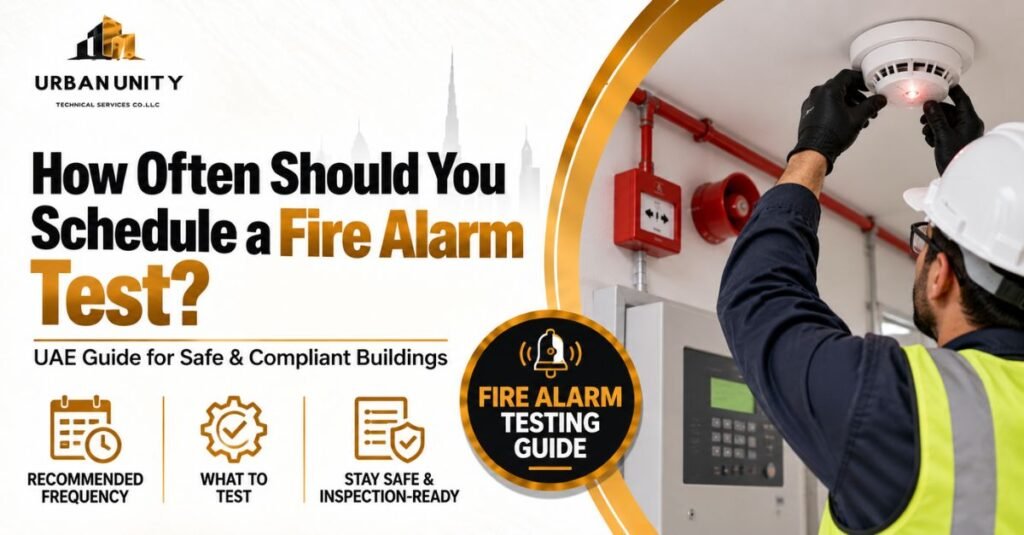
A fire alarm test is one of the most important checks for any UAE building, but many owners and facility managers only think about it when a fault appears or an inspection date is near. Testing helps confirm that the fire alarm control panel, smoke detectors, heat detectors, manual call points, sounders, strobes, batteries, wiring, loops, and zones are working correctly.
This guide is useful for building owners, facility managers, contractors, business tenants, and property managers responsible for offices, warehouses, restaurants, clinics, salons, retail shops, factories, schools, villas, and commercial buildings across the UAE.
In this post, we’ll explain how often you should schedule a fire alarm test, what should be tested, why regular fire alarm testing matters, and how a fire alarm AMC or maintenance plan can help keep your building safe, compliant, and inspection-ready.
Table of Contents
ToggleWhat Is a Fire Alarm Test?
A fire alarm test is a planned check of a fire alarm system to confirm that the panel, detectors, manual call points, sounders, strobes, batteries, wiring, and alarm signals work correctly. It helps identify faults early, reduce false alarms, support fire alarm maintenance, and keep UAE buildings safer and inspection-ready.
A fire alarm test is not the same as simply pressing a button and hearing a sound. A proper test should check whether the system can detect a fire risk, send the correct signal to the fire alarm control panel, activate the right sounders or strobes, and show accurate alarm or fault information.
For example, a technician may perform a smoke detector test, heat detector test, manual call point test, sounder and strobe test, backup battery test, and fire alarm control panel test. In addressable fire alarm systems, testing also helps confirm that the correct device address appears on the panel. In conventional fire alarm systems, it helps confirm that the correct zone is activated.
Regular fire alarm testing is part of responsible building management. It helps facility teams find problems before they become urgent fire alarm faults, failed inspections, false alarms, or emergency repair issues.
The correct fire alarm test frequency depends on the building type, system design, authority requirements, manufacturer recommendations, and the building’s fire alarm AMC or maintenance contract. A small shop may not need the same testing routine as a large warehouse, hospital, school, hotel, or commercial tower.
In the UAE, fire alarm systems are part of wider life-safety and Civil Defence readiness. Dubai Civil Defence lists the UAE Fire and Life Safety Code of Practice as a standard reference for contractors, consultants, and concerned bodies to implement Civil Defence safety requirements. Hassantuk also explains that fire and life safety alarms from connected buildings are received 365 days a year, along with maintenance alarms generated from building systems.
As a practical guide, UAE buildings should not wait for a fault or inspection notice before testing the system. Fire alarm testing should be planned regularly through a maintenance schedule or fire alarm AMC.
Building staff or facility teams should visually check the fire alarm control panel for normal condition, warning lights, trouble signals, power issues, or fault messages. This does not replace professional fire alarm testing, but it helps catch problems early.
Many buildings benefit from monthly functional checks, especially commercial properties with daily operations. This may include checking manual call points, selected detectors, panel signals, batteries, and sounder response based on the maintenance plan.
For commercial buildings, a fire alarm maintenance contractor may perform scheduled AMC visits to test devices, review fault history, inspect wiring, check backup batteries, and confirm that the system is operating correctly.
A full system test should be planned at least once a year, or as required by the approved maintenance plan, authority requirements, building risk level, and manufacturer guidelines. This helps confirm that the fire alarm system is ready for operation, inspection, and future maintenance.
The safest answer is: schedule fire alarm testing regularly, document every test, and follow the maintenance frequency recommended for your building type and system.
Fire Alarm Test Checklist
A proper fire alarm test should be more than a quick sound check. It should confirm that the main system components are working correctly and that the building team has clear records after every test.
A basic fire alarm testing checklist may include:
-
Fire alarm control panel status check
-
Smoke detector test
-
Heat detector test
-
Manual call point test
-
Sounder and strobe test
-
Backup battery test
-
Wiring, loop, and zone inspection
-
Alarm signal and fault signal check
-
Review of previous fire alarm faults
-
Test report and maintenance recommendations
The test should also be documented. A clear report helps building owners, facility managers, tenants, and maintenance teams track system performance, repeat faults, repairs, and upcoming AMC requirements.
For UAE commercial buildings, regular fire alarm testing helps reduce false alarms, prevent surprise system failures, support Civil Defence readiness, and protect daily business operations. The key takeaway is simple: do not wait until the fire alarm panel shows a fault. Test the system before problems appear.
Urban Unity provides fire alarm testing, fire alarm inspection, fire alarm maintenance, fire alarm AMC, troubleshooting, repair, and complete fire safety support for UAE buildings.
Our team can check your fire alarm control panel, detectors, call points, sounders, strobes, batteries, wiring, loops, zones, and maintenance reports to help keep your building safe and inspection-ready.